
The Clear Skin Routine: Morning and Night Steps for Every Skin Type
You have tried the 10-step routine. The 12-step routine. The one your favorite influencer swore by. It worked for two weeks, then your skin went right back to doing whatever it wanted.
Here is what nobody told you: most clear skin routines only address half the equation.
They focus entirely on what goes on your face. Cleansers, serums, creams, masks. All external.
But your skin is an organ. The largest one you have. And like every other organ, it responds to what you put inside your body just as much as what you put on it.
The routine that finally works is the one that addresses both. Products on the outside, nutrition on the inside.
That is what we do differently here at the club. We build clear skin routines that work from the inside out.
By the end of this post, you will have a complete morning and night clear skin routine with specific product steps, specific food pairings, and adjustments for your skin type. Simple enough to follow every single day.
What Is a Clear Skin Routine?
A clear skin routine is a consistent morning and night skincare practice, combined with intentional nutrition, that addresses skin health from both the outside and the inside.
It brings together simple skincare steps (cleanse, treat, protect) with skin-supporting foods and drinks that calm inflammation, support collagen, and nourish your skin from within.
Most routines stop at the bathroom mirror. This one starts in the kitchen, too.
The principle is straightforward. Your topical products handle the surface: clearing pores, delivering active ingredients, protecting against environmental damage. Your nutrition handles the foundation: reducing the internal inflammation that triggers breakouts, feeding your skin cells the vitamins and fatty acids they need to repair and regenerate.
One without the other is incomplete. Together, they are the whole clear skin routine.
Why Most Clear Skin Routines Stop Working
You have probably experienced this. A new routine works beautifully for a few weeks, then plateaus. Your skin starts breaking out again, or the glow fades, or you just stop seeing progress.
There are three common reasons:
1. The routine only treats the surface. If your skin is inflamed from the inside (sugar, processed foods, dehydration, poor gut health), no amount of serum is going to overcome that. Topical products manage symptoms. Nutrition addresses root causes.
2. Too many products, not enough consistency. The beauty industry profits when you believe you need 10 products. The truth is, a clear skin routine needs 4 steps in the morning and 4 at night. Everything beyond that is optional refinement, not a requirement.
3. The wrong products for your skin type. A rich cream that works perfectly for dry skin will clog oily pores within a week. Knowing your skin type and choosing accordingly is non-negotiable. We will cover adjustments later in this post.
The routine below solves all three. It pairs smart products with smart nutrition, keeps the steps minimal, and adjusts for every skin type.
Your Morning Clear Skin Routine (5 Minutes)
Your morning routine is about protection. You are preparing your skin to face the day: UV exposure, pollution, environmental damage, and whatever else the world throws at it.
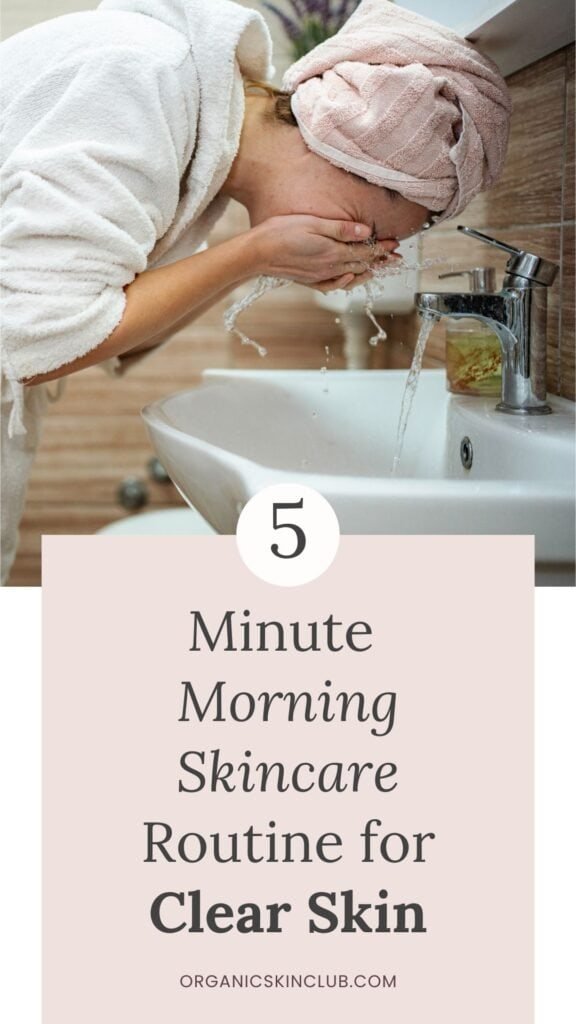
Step 1: Gentle Cleanse
Your skin was not out in the world overnight. It does not need a deep cleanse in the morning.
A gentle, sulfate-free cleanser removes the oils and dead skin cells that accumulated while you slept. If your skin feels tight or stripped after cleansing, your cleanser is too harsh.
What to look for: Cream or gel cleansers with plant-derived surfactants (coconut-based surfactants like coco glucoside are effective without stripping). Fragrance-free is always better.
I personally use a jojoba-based cleansing oil in the morning because traditional foaming cleansers leave my skin red and reactive. If that resonates, try oil cleansing. Your skin will tell you within a week whether it agrees.
Step 2: Serum
This is where your active ingredients live. Serums have smaller molecules and higher concentrations than moisturizers, so they penetrate deeper and deliver more.
Your morning serum depends on your primary skin concern:
| Skin Concern | Best Morning Serum | Why It Works |
|---|---|---|
| Dullness, uneven tone | Vitamin C (L-ascorbic acid, 10-20%) | Brightens, protects against free radical damage, supports collagen |
| Breakouts, enlarged pores | Niacinamide (Vitamin B3) | Regulates oil production, reduces inflammation, minimizes pore appearance |
| Fine lines, loss of firmness | Peptide serum | Signals skin to produce collagen and elastin |
| General hydration, all skin types | Hyaluronic acid | Holds up to 1,000x its weight in water, plumps and hydrates |
Apply to slightly damp skin. This helps absorption and gives hyaluronic acid the water it needs to work properly.
One serum is enough. You do not need to layer three actives in the morning. Pick the one that matches your biggest concern and use it consistently.
Step 3: Moisturize
Even oily skin needs moisture. Skipping moisturizer tells your skin it is dehydrated, which triggers more oil production. That is the opposite of what you want.
For oily skin: Lightweight gel moisturizers with hyaluronic acid and aloe vera. These hydrate without adding heaviness. For dry skin: Richer cream moisturizers with shea butter, squalane, or jojoba oil. For combination skin: A medium-weight lotion, or use gel on your T-zone and cream on your cheeks.
Look for products free from synthetic fragrance, parabens, and phthalates. Your moisturizer sits on your skin all day. Ingredient quality matters here more than almost any other step.
Step 4: SPF
Non-negotiable. UV damage is the single biggest contributor to premature aging, hyperpigmentation, and skin damage. Even on cloudy days.
Mineral sunscreens (zinc oxide, titanium dioxide) sit on top of the skin and physically deflect UV rays. Chemical sunscreens absorb into the skin and convert UV to heat. For a clean routine, mineral is the better choice.
Look for: SPF 30 or higher, broad spectrum, non-nano zinc oxide for the safest and most effective mineral protection.
Apply as your very last skincare step, after moisturizer.
Step 5: Morning Nutrition
This is the step most routines skip entirely. It is also the step that makes the biggest long-term difference.
Your skin cells turn over every 28 days. The cells forming right now are built from what you ate this week. Feed them well and it shows.

Quick morning skin meals:
Clear skin smoothie: Spinach, frozen berries (antioxidants), half an avocado (healthy fats), collagen peptides, and a splash of coconut water. Five minutes, covers your bases.
The egg plate: Two eggs (protein, biotin, vitamin A), half an avocado (omega-9 fatty acids), handful of spinach (vitamin C, iron). Quick, filling, and your skin cells will thank you.
The overnight oats: Rolled oats, chia seeds (omega-3s), walnuts (zinc, selenium), mixed berries, and a drizzle of honey. Make the night before, grab and go.
Drink swap: Green tea instead of coffee. Green tea contains EGCG, a catechin that reduces sebum production and fights inflammation. One cup a day is enough to see a difference over time. If you cannot give up coffee entirely, just add one cup of green tea alongside it.
A solid routine is only as good as the products and habits behind it. This free guide covers organic skincare, skin-nourishing foods, and the daily habits that support clear skin from the inside out.

Get Glowing Skin, From Within
Clean skin starts on the inside. Get your free guide to organic routines, skin-nourishing foods, and the products we actually trust.
No spam. Unsubscribe anytime.
Your Evening Clear Skin Routine (10 Minutes)
Your nighttime routine is where the real work happens. Your skin’s repair cycle activates while you sleep, with cell turnover peaking between 11 PM and 2 AM. This is when you deliver your most potent treatments.
Step 1: First Cleanse (Oil-Based)
If you wore sunscreen, makeup, or spent time outside, you need a first cleanse to dissolve it all. Water-based cleansers cannot break down oil-based products like SPF and foundation on their own.
Oil cleansers use the principle that oil dissolves oil. Massage onto dry skin for 60 seconds, add a little water to emulsify (it will turn milky), then rinse.
Good first cleanse options: Jojoba oil, sweet almond oil, or a formulated cleansing balm with plant oils. This step is not about stripping. It is about dissolving.
Step 2: Second Cleanse (Water-Based)
Same gentle cleanser as morning. This removes whatever the oil cleanser loosened, plus any remaining impurities.
Your skin should feel clean but never tight. If it feels stripped, your cleanser is doing too much.
Double cleansing at night is the single most underrated step in skincare. If you skip it, every product you apply after is fighting through a layer of residue. The results are never as good.
Step 3: Treatment Serum
Evening is when your stronger actives come out. Your skin is not fighting UV exposure or pollution overnight, so it can focus entirely on repair.
Effective nighttime actives:
- Retinol or bakuchiol: Cell turnover, collagen production, anti-aging. Bakuchiol is the plant-based alternative for sensitive skin. Start with 2-3 nights per week and build up.
- Niacinamide: Strengthens the skin barrier, calms inflammation, evens tone. Gentle enough for nightly use.
- Azelaic acid: Targets breakouts and post-acne marks without the harshness of benzoyl peroxide.
- Peptides: Signal your skin to produce more collagen and elastin overnight.
Start with one active. Adding multiple at once makes it impossible to know what is working (or what is irritating your skin). You can add a second active after 4-6 weeks once your skin has adjusted.
Step 4: Night Cream
Your richest product goes last. Night cream creates a nourishing barrier that locks in your treatment serum and supports overnight repair.
Look for: Plant-based formulas with cold-pressed oils (rosehip, argan, marula), shea butter, and ceramides. These deliver fatty acids and antioxidants while your skin does its repair work.
I use Crunchi’s Night Light Cream because the formula is lightweight enough that it does not feel suffocating, but rich enough to lock everything in. If you prefer a facial oil over a cream, that works too. Rosehip oil over your serum is a beautiful simple option.
Step 5: Evening Nutrition
What you eat at dinner directly affects your skin overnight. Your body’s repair processes need raw materials.
Skin-supporting dinner ideas:
The omega plate: Wild salmon (omega-3 fatty acids, astaxanthin), roasted sweet potatoes (beta-carotene converts to vitamin A), and steamed broccoli (vitamin C, sulforaphane). This is arguably the most skin-supportive meal you can eat.
The collagen bowl: Bone broth as a base, with vegetables and protein of your choice. Bone broth provides amino acids (glycine, proline) that your body uses to produce collagen.
The simple version: Any protein, any vegetable, a healthy fat. The bar does not have to be high. Just avoid the two biggest skin saboteurs at dinner: excess sugar and alcohol. Both spike inflammation and dehydrate skin cells.
Before bed: A small cup of bone broth, golden milk (turmeric, ginger, coconut milk), or plain warm water with lemon. Hydration before bed supports overnight cell turnover.
The Routine at a Glance
| Step | Morning (5 min) | Evening (10 min) |
|---|---|---|
| 1 | Gentle cleanser | Oil cleanser (first cleanse) |
| 2 | Serum (Vitamin C, niacinamide, or HA) | Gentle cleanser (second cleanse) |
| 3 | Moisturizer | Treatment serum (retinol, peptides, etc.) |
| 4 | SPF (mineral, broad spectrum) | Night cream or facial oil |
| 5 | Skin-supporting breakfast or smoothie | Omega-rich dinner, skip the sugar |
Four product steps and one nutrition step, morning and night. That is your complete clear skin routine.
Adjust by Skin Type
The core routine stays the same. What changes is the weight of your products and which actives you prioritize.
Oily skin: Gel cleansers, lightweight serums, gel moisturizer. Prioritize niacinamide (regulates oil) and azelaic acid (treats breakouts without drying). Skip heavy creams at night and use a light facial oil instead (jojoba mimics your skin’s natural sebum and can actually help regulate oil production).
Dry skin: Cream cleansers, hydrating serums (hyaluronic acid), rich moisturizers with shea butter or squalane. Prioritize peptides and rosehip oil at night. Double up on healthy fats in your meals: avocado, salmon, walnuts, olive oil.
Combination skin: This is most people. Use a gel cleanser and medium-weight moisturizer. You can apply lighter products on your T-zone and richer products on your cheeks. Niacinamide is your best friend because it balances oil production where you are oily and supports hydration where you are dry.
Acne-prone skin: Gentle, non-stripping cleansers (harsh products trigger more oil production). Niacinamide and azelaic acid are your primary actives. Avoid heavy oils that can clog pores (coconut oil is a common culprit). On the nutrition side, reducing dairy and refined sugar makes a measurable difference for many acne-prone people. Track it for 30 days and see.
The Products Matter
Not all skincare is created equal. Two moisturizers can look identical on the shelf but have wildly different ingredient lists.
Here is what to prioritize when choosing products for your clear skin routine:
Choose organic when possible. Organic ingredients are grown without synthetic pesticides or fertilizers. For products that sit on your skin all day (moisturizer, SPF, serum), that matters. Read our full guide: What Is Organic Skincare?
Read the ingredient list, not the marketing. “Natural” and “clean” are unregulated marketing terms. Any brand can use them. Instead, look for third-party certifications and read the actual ingredient list. If you cannot pronounce half of it, that is worth questioning. Learn which ingredients actually work: What Are Natural Skincare Ingredients?
Fewer products, better quality. Your skin does not need 12 products. It needs 4-5 good ones used consistently. Invest in quality ingredients over quantity of bottles.
For our full product recommendations (every step, tested and ranked), visit Our Favorites.
Consistency Over Complexity
The best clear skin routine is not the most complicated one. It is the one you will actually do every day.
Morning: cleanse, serum, moisturize, SPF, eat well.
Evening: double cleanse, treat, night cream, eat well.
That is it. No essence step. No ampoule step. No sheet mask requirement. Those are all nice additions, but they are not the foundation.
The foundation is these 8-10 simple steps, done consistently, with products you trust and food that feeds your skin from within.
Give this routine 28 days. That is one full skin cell turnover cycle. You will not see overnight results (anyone promising that is selling something). But at the end of a month, with consistent product use and intentional nutrition, you will see a real difference.
We glow from within. That is the club way.
Start Tonight
You now have the complete clear skin routine, morning and night, with specific products and specific foods for every step.
Pick one thing to start with tonight. Double cleanse. Add a Vitamin C serum tomorrow morning. Make the clear skin smoothie for breakfast. You do not have to overhaul everything at once. Stack one habit at a time.
Your skin is an organ that responds to how you care for it, inside and out. Start caring for it on both sides, and it will show.
Keep reading:
- What Is Organic Skincare? And Why It’s Not the Same as Clean or Natural
- Skincare Routine Order: The Exact Steps Morning and Night
- The Gut-Skin Connection? How Your Gut Health Shows Up on Your Face
- Foods for Clear Skin: What to Eat for a Healthier Complexion
Your Routine, Printed and Ready
The Glow From Within Welcome Kit includes a printable Morning Glow Ritual and Evening Reset Ritual card with every step from this post, designed to sit by your bathroom mirror.
Plus a cheat sheet of the 10 best foods for glowing skin and a checklist of what to look for (and what to toss) in your products.
It is free. It takes 5 minutes to use. And it is waiting for you inside the club.
You have the routine. Now get the full guide to the organic products and foods that make it work.
Get Glowing Skin, From Within
Clean skin starts on the inside. Get your free guide to organic routines, skin-nourishing foods, and the products we actually trust.
No spam. Unsubscribe anytime.