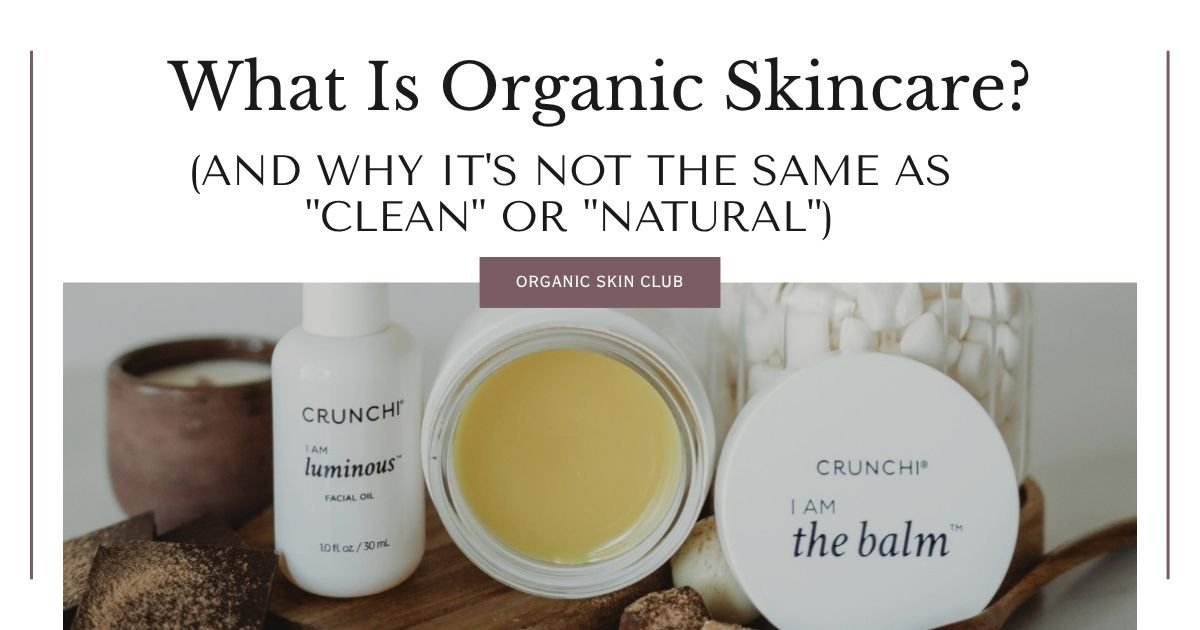
What Is Organic Skincare? (And Why It’s Not the Same as “Clean” or “Natural”)
Before I had my first baby, I didn’t think about any of this stuff. MAC makeup, drugstore moisturizer, whatever body wash was on sale.
I grabbed it, I used it, I never flipped the bottle over.
Then I got pregnant. And something shifted.
I started reading labels for the first time, really reading them, and I realized I had no idea what half of those ingredients were. Or what they were doing to my skin. Or whether they mattered at all.
So I did what most people do. I walked into my local natural store and bought the “organic” stuff. It felt like the right move.
But here’s the thing: natural, clean, organic, green, non-toxic … those words sound like they mean the same thing.
They don’t.
And nobody explains the difference, because the confusion is kind of the point. It keeps you buying based on how a label feels instead of what it actually means.
That’s what this post is for.
By the end, you’ll know exactly what organic skincare means, how it’s different from clean and natural, what to actually look for on a label, and how to stop falling for marketing that sounds good but means nothing.
Consider this your first day in the club.
What Is Organic Skincare?
Let’s keep this simple.
Organic skincare refers to skincare products made with ingredients that have been grown and processed without synthetic pesticides, fertilizers, GMOs, or artificial chemicals. To be certified organic, these ingredients must meet standards set by organizations like the USDA (United States Department of Agriculture).
The USDA Organic seal means at least 95% of the ingredients are organically farmed and the product has passed third-party verification. You’ll also see “made with organic ingredients,” which means at least 70%.
Both are regulated.
Where it gets less clear is when a brand highlights one or two organic ingredients in their marketing while the rest of the formula is conventional. The word “organic” in a product name doesn’t always mean the whole product is certified.
The seal is what confirms it. In Europe, look for COSMOS Organic or Ecocert.
Organic skincare aims to:
- Reduce your skin’s exposure to synthetic chemicals and pesticides
- Support farming practices that are better for the environment
- Deliver nutrients from ingredients grown in healthier soil (which actually matters for potency)
It also tends to avoid common irritants like synthetic fragrances, parabens, phthalates, and formaldehyde releasers, though that’s more of a byproduct than a requirement.
Want to know exactly what to look for (and what to toss) when you’re building your organic skincare routine? Download The Glow From Within Welcome Kit — it’s free, and it’s yours the moment you join the club.
Why Does It Matter? (Organic vs. Everything Else)
Here’s where most people get tripped up.
You’d think that “natural,” “clean,” and “organic” would all mean roughly the same thing. But in the skincare world, only one of those words has a legal definition.
Organic = regulated. Certified organic products must meet specific agricultural and processing standards, verified by a third party.
Natural = unregulated. There is no legal standard for “natural” in skincare. A product can contain 99% synthetic ingredients and still call itself natural. No one will stop them.
Clean = marketing. “Clean beauty” is a concept invented by the beauty industry. It generally implies the absence of certain controversial ingredients, but there’s no certification, no standard, and no agreed-upon definition. What one brand calls “clean,” another brand puts in every product.
Non-toxic = misleading. This term suggests that other products are toxic, which is an oversimplification. The dose makes the poison. Water is toxic in large enough quantities. “Non-toxic” has no regulatory meaning in skincare.
Here’s a quick reference:
| Term | Regulated? | Certification? | What It Actually Means |
|---|---|---|---|
| Organic | Yes (USDA) | Yes | Ingredients grown without synthetic pesticides/chemicals |
| Natural | No | No | Nothing specific — no legal definition |
| Clean | No | No | Marketing term — varies by brand |
| Non-Toxic | No | No | Implies safety but has no standard |
This is why reading the ingredient list matters more than reading the front of the bottle.
You’ll Be Told “It Doesn’t Matter”
Some people in the skincare space will tell you that organic doesn’t matter. That your skin can’t tell the difference between an organic rosehip oil and a conventional one.
Here’s what they’re missing.
Organic farming produces plants with higher concentrations of certain antioxidants and polyphenols. Plants that aren’t sprayed with pesticides have to produce more of their own protective compounds.
Those compounds are exactly what make botanical skincare ingredients effective.
On top of that, conventional farming uses pesticide residues that can linger in plant-derived oils and extracts. Your skin is your largest organ. It absorbs what you put on it.
Choosing organic reduces the number of synthetic chemicals making contact with your skin every single day.
This isn’t about perfection. It’s about paying attention.
A Quick History (That Actually Matters)
Organic skincare isn’t new. People have been using plant oils, botanical extracts, and herbal preparations on their skin for thousands of years.
Ancient Egyptian, Greek, and Ayurvedic traditions all relied on what we’d now call “organic” ingredients.
What’s new is the industrial skincare complex. In the 20th century, synthetic ingredients became cheaper, more shelf-stable, and easier to mass-produce.
The industry shifted to lab-made formulations because they were more profitable, not because they were better for your skin.
The organic skincare movement of the last 20 years is really just a return to what worked before the industry decided profit mattered more than ingredients.
The global organic skincare market is projected to reach $24.4 billion by 2033, growing at 8.9% per year. That’s not a trend. That’s a correction.
Understanding what organic skincare really means is the first step. The next step is building a routine around it. This free guide covers the organic products, foods, and daily habits that make glowing skin possible.
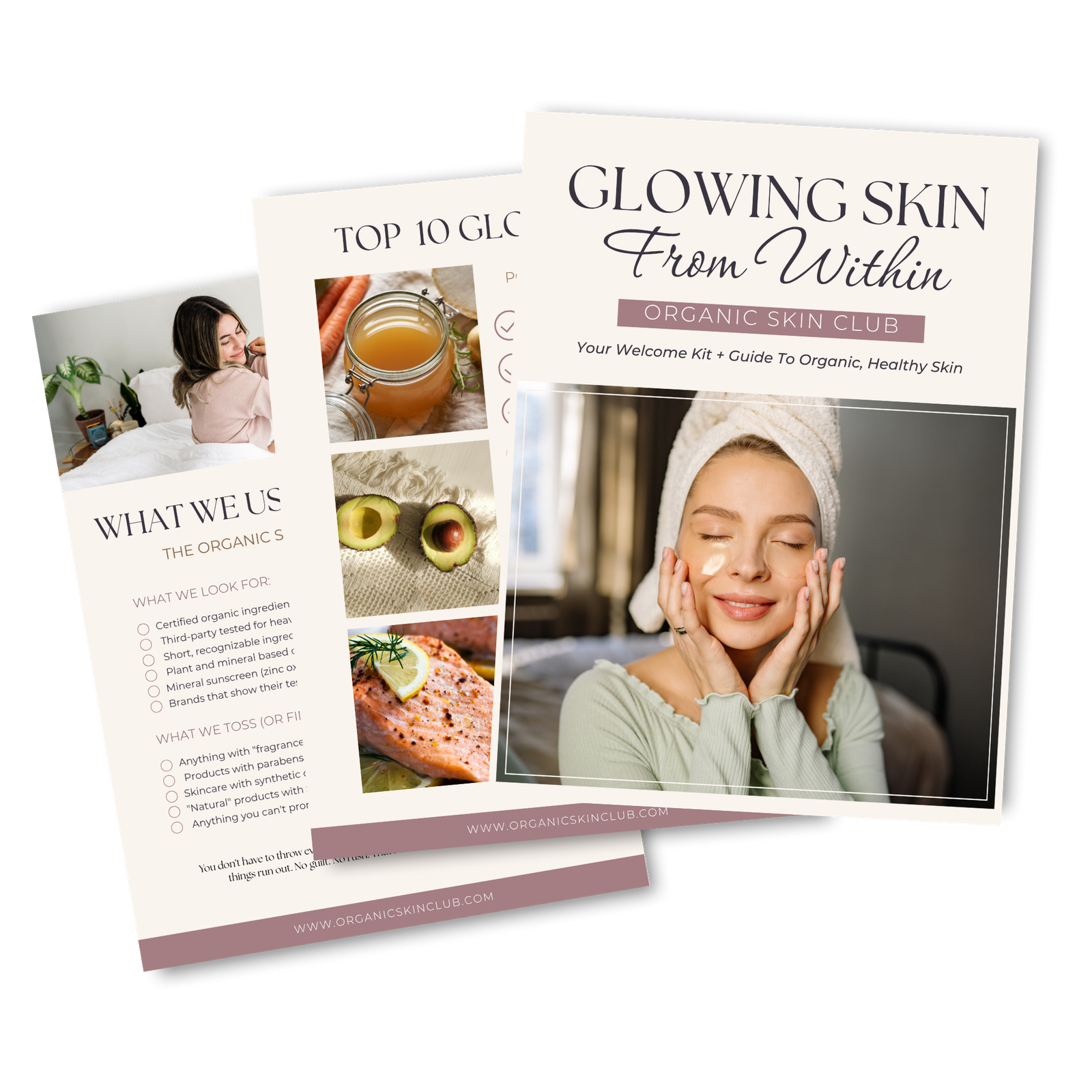
Get Glowing Skin, From Within
Clean skin starts on the inside. Get your free guide to organic routines, skin-nourishing foods, and the products we actually trust.
No spam. Unsubscribe anytime.
How to Tell If a Product Is Actually Organic
So you’re standing in the store (or scrolling through a website). Here’s what to look for.
Step 1: Look for the Seal
The USDA Organic seal means the product meets federal organic standards. In Europe, look for COSMOS Organic or Ecocert. If there’s no seal, the word “organic” on the label means nothing enforceable.
Step 2: Read the Ingredient List
Ingredients are listed in order of concentration. If “organic aloe vera” is the 15th ingredient and “fragrance” is the 3rd, that product is not truly organic in any meaningful way.
Look for ingredients listed as “Certified Organic” or marked with an asterisk (*) pointing to an organic certification note.
Step 3: Check the Brand’s Testing Standards
The best organic skincare brands go beyond organic farming. They also test for heavy metals, PFAS (forever chemicals), and other contaminants that can be present even in organic ingredients.
For example, some brands put every product through a 30-step ingredient screening process that includes heavy metals testing. That’s the kind of transparency worth paying for.
Step 4: Ignore the Marketing, Trust the Evidence
A beautiful label, an influencer’s endorsement, and the word “natural” in cursive font mean nothing. The ingredient list and the certifications are the only things that matter.
Here’s what to avoid:
- Products that say “made with organic ingredients” but have no certification
- Brands that won’t share their full ingredient list
- “Natural” products with synthetic fragrance listed in the ingredients
- Any product that relies on buzzwords instead of evidence
Your Next Move
Organic skincare isn’t complicated once you know what to look for. The industry makes it confusing because confusion is profitable.
But now you know the difference between organic, natural, clean, and non-toxic. You know how to read a label. And you know that the front of the bottle is marketing, while the back of the bottle is the truth.
If you’re just starting to make the switch, take it slow. You don’t have to overhaul your entire routine in one weekend.
Replace one product at a time as things run out. Start with the products that stay on your skin the longest (moisturizer, serum) since those have the most contact time.
Here are some good next reads:
- What Is a Skincare Routine? The Exact Order, Steps, and Why It Matters
- What Are Natural Skincare Ingredients? The Ones That Actually Work
- What Is a Clean Skincare Routine? How to Build One from Scratch
The good news? You don’t have to figure this out alone.
Join the Club
The Glow From Within Welcome Kit has everything you need to get started: a printable cheat sheet of the 10 best foods for glowing skin, your morning and evening skincare rituals, and a checklist of exactly what to look for (and what to toss) in your products.
It’s free. It’s yours. And it takes about 5 minutes to go through.
Ready to go organic for real? Get the free guide and start building a routine your skin will thank you for.
Get Glowing Skin, From Within
Clean skin starts on the inside. Get your free guide to organic routines, skin-nourishing foods, and the products we actually trust.
No spam. Unsubscribe anytime.