
The Organic Skincare Routine: What “Organic” Actually Means for Your Skin
Walk into any store and you will see “organic” on half the labels. Green packaging. Leaf logos. Words like “naturally derived” and “plant-based.”
Most of it means very little.
There is no single federal regulation that defines “organic” in skincare the way the USDA defines it for food. A product can contain 2% organic aloe and 98% synthetic chemicals and market itself as organic. That green label on the front has no legal enforcement behind it.
An organic skincare routine uses products formulated primarily from certified organic, plant-derived, minimally processed ingredients while avoiding synthetic chemicals, artificial fragrances, parabens, sulfates, phthalates, and known endocrine disruptors. Building a genuinely organic routine means looking past the label to the actual ingredient list.
When I was pregnant with my first baby, I started really looking into what I was putting on my skin. Before that, I used MAC, all the drugstore stuff, never thought about any of it. That pregnancy was the moment everything shifted. I realized that what goes on your skin matters, especially when your body is building another human.
Here is what organic skincare actually means and how to build a routine around it.
What “Organic” Actually Means in Skincare
The Label Problem
In food, “USDA Organic” means something. The farm was inspected. Pesticide use is regulated. Processing standards are enforced.
In skincare, the word “organic” is largely unregulated. A brand can use it however they want. That means you have to do the work of understanding what is actually in the bottle.
What to Look For
Certifications that mean something:
- USDA Organic: The same standard as food. At least 95% of ingredients must be certified organic. This is the gold standard, but few skincare brands qualify.
- NSF/ANSI 305: Specifically designed for personal care products. Requires 70%+ organic content.
- COSMOS Organic: European standard. Strict limits on processing methods and allowable synthetic ingredients.
Third-party testing that goes further:
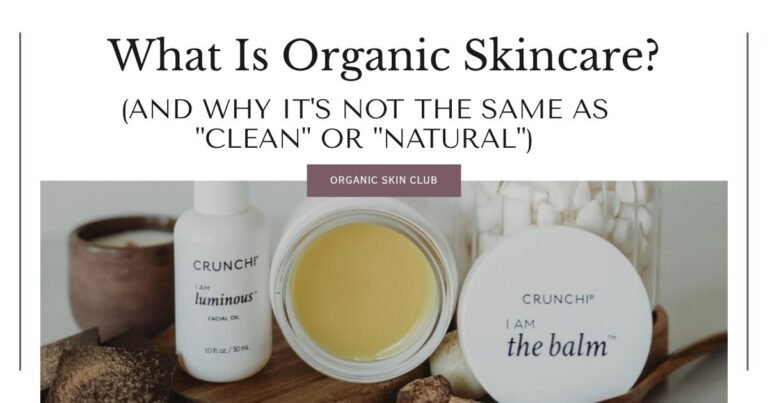
Some brands go beyond organic sourcing and test their finished products for contaminants like heavy metals, PFAS (forever chemicals), and endocrine disruptors. Organic ingredients can still pick up contaminants during manufacturing. Crunchi, for example, uses a 30-step ingredient screening process and tests every finished product for heavy metals, PFAS, and endocrine disruptors. That level of testing is rare.
Organic vs. Natural vs. Clean
These words are used interchangeably, but they mean different things.
Organic: Ingredients grown without synthetic pesticides or fertilizers. Ideally certified.
Natural: Derived from nature (plants, minerals). But “natural” is not regulated at all. Arsenic is natural.
Clean: Usually means “free from” a list of ingredients the brand considers harmful. Every brand defines “clean” differently.
The safest approach: ignore the marketing word on the front. Read the ingredient list on the back. Look for third-party testing results.
Building an Organic Skincare Routine (Step by Step)
Step 1: Cleanser
Your cleanser should remove dirt and impurities without stripping your natural oils.
Organic option: Cold-pressed organic jojoba oil for oil cleansing. One ingredient. You know exactly what it is and where it came from. I wash my face with it every day, and it is genuinely better than any cleanser I have ever used. My skin gets very red from traditional cleansers (rosacea), and jojoba solved that.
Other options: Look for sulfate-free, fragrance-free cleansers with recognizable ingredients. If you cannot pronounce half the ingredient list, keep looking.
Step 2: Serum
This is where your routine delivers concentrated actives.
Key ingredients to look for:
- Vitamin C (brightening, collagen support)
- Niacinamide (oil balance, inflammation reduction)
- Peptides (collagen production signaling)
- Hyaluronic acid (hydration)
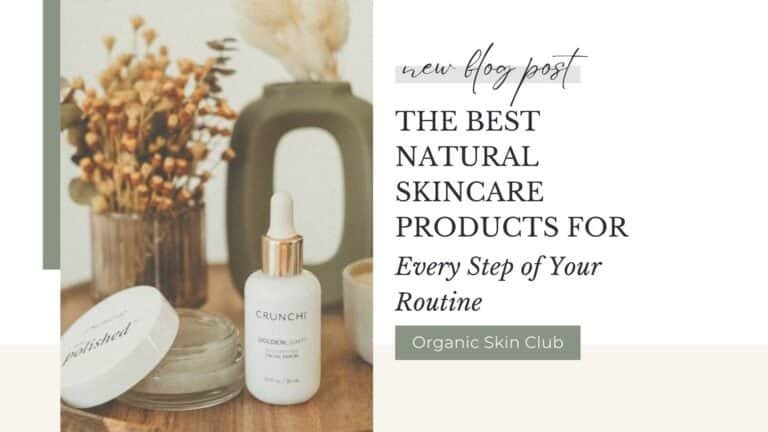
My pick: The Crunchi Golden Light Serum. Peptide-based, third-party tested for heavy metals and toxins. It is the one product in my routine that I would never swap.
Step 3: Moisturizer
Daytime: Lightweight. Gel-based for oily skin, cream-based for dry. Look for organic shea butter, jojoba, squalane, or hyaluronic acid.
Nighttime: Richer. Your skin loses moisture while you sleep, so a night cream with ceramides or botanical oils helps lock everything in. I use the Crunchi Night Light Cream at night. Rich without feeling heavy.
Step 4: Weekly Treatment
Face mask: Raw manuka honey is the simplest organic treatment there is. Antibacterial, anti-inflammatory, deeply moisturizing. 15-20 minutes, once a week.
Exfoliation: 1-2 times per week. Choose a gentle AHA or BHA. Mad Hippie Exfoliating Serum is a clean, effective option.
Now that you know what organic actually means and how to build a routine, the next step is knowing which foods support your skin from the inside. This free guide covers all of it.

Get Glowing Skin, From Within
Clean skin starts on the inside. Get your free guide to organic routines, skin-nourishing foods, and the products we actually trust.
No spam. Unsubscribe anytime.
The Inside Half of an Organic Routine
If you are choosing organic products because you care about what goes into your body, that same logic applies to what you eat.
Organic skincare works best when paired with organic, whole-food nutrition. The same anti-inflammatory ingredients you want in your products are the same ones you want on your plate.
Daily additions:
- A clear skin smoothie for breakfast (berries, greens, collagen, healthy fats)
- Green tea instead of processed coffee drinks (EGCG for inflammation reduction)
- Salmon or fatty fish twice a week (omega-3s for barrier strength)
- A glowing skin juice or detox water as your daily drink
For the full dietary approach, read our glowing skin diet guide.
Questions to Ask Before Buying Any “Organic” Product
- Is the full ingredient list visible before purchase? If a brand hides its ingredients, that is a red flag.
- Does it have a recognized organic certification? USDA Organic, NSF 305, or COSMOS.
- Has the finished product been third-party tested? Organic ingredients can still contain contaminants from manufacturing.
- Is the brand transparent about what they test for? Heavy metals, PFAS, endocrine disruptors.
- Does “organic” describe the whole product or just one ingredient? “Made with organic aloe” is not the same as a truly organic formulation.
An Organic Routine Does Not Have to Be Complicated
My routine is four products most days. Jojoba oil cleanser, Golden Light Serum, Night Light Cream, and an occasional honey mask. That is it.
Organic skincare is not about having more products. It is about having better ones. Products with ingredients you recognize, from brands you trust, tested for things that matter.
For specific product recommendations by category, read our natural skincare products guide. For the brands behind those products, see our natural skincare brands guide.
Just like in the kitchen, ingredients only are always going to be better. Keep it simple. Keep it real. Your skin knows the difference.
Want a simple guide to clean skincare and skin-loving foods? Grab the free Glow From Within Welcome Kit and get started today.
An organic routine does not have to be complicated. This free guide gives you exactly what you need to get started, no guesswork.
Get Glowing Skin, From Within
Clean skin starts on the inside. Get your free guide to organic routines, skin-nourishing foods, and the products we actually trust.
No spam. Unsubscribe anytime.